
Sleep Apnea in Men: The Signs Guys Brush Off (and Why They Matter)

November is men’s health month, a time when moustaches grow, conversations open up, and men are encouraged to take a closer look at their health.
So here’s one thing worth adding to the list: your sleep.
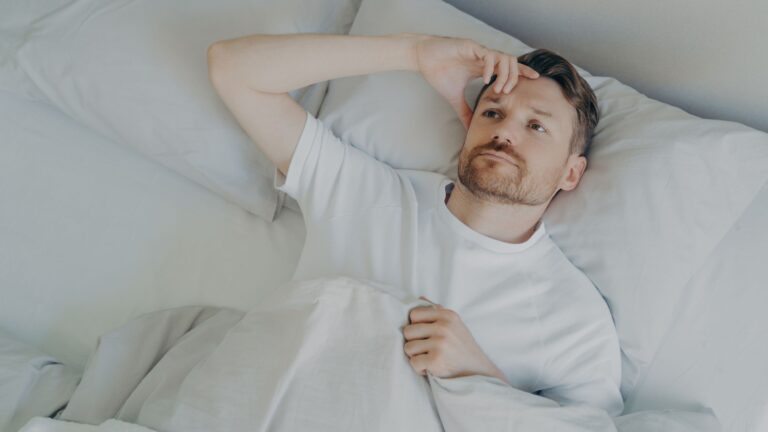
Maybe you’ve been told you snore like a freight train. Maybe you’re dozing off on the couch by 8 p.m., or reaching for another coffee just to get through the afternoon. Maybe you wake up with a headache more often than you’d like to admit.
It’s easy to shrug these off. Everyone snores. Work is busy. I’m just getting older. But together, they can be signs of obstructive sleep apnea, a common sleep condition that’s more likely to affect men, and that often goes unnoticed for years.
The good news? Finding out is a lot easier than most guys think.
Why Sleep Apnea Often Goes Unnoticed in Men
Obstructive sleep apnea happens when your airway gets blocked or narrowed again and again while you sleep. Each time, your breathing pauses or becomes shallow, and your brain briefly wakes you up to get air moving again. This can happen many times an hour, all night long, and most people never remember it.
So why do so many men miss it?
- The snoring gets normalized. Loud snoring is often treated as a joke rather than a possible health sign.
- Tiredness gets blamed on life. Work, kids, stress, age. There’s always another explanation.
- Men are often slower to see a doctor. Many men put off checkups until something feels seriously wrong.
- It happens while you’re asleep. You can’t see your own breathing pauses. Often, a partner is the first to notice.
The result is that a lot of men live with untreated sleep apnea, and with the exhaustion that comes with it, without realizing there’s a reason behind it. It’s estimated that more than 80% of sleep apnea is not diagnosed!
Why Men Are More Likely to Have Sleep Apnea
Sleep apnea can affect anyone, but it’s more common in men. Some of the factors that can raise the risk include:
- Neck and airway size: A thicker neck or narrower airway can make it easier for the airway to collapse during sleep. This could be genetic and not even visible!
- Weight changes: Extra weight, especially around the upper body, can put pressure on the airway.
- Age: The risk tends to increase as we get older.
- Alcohol close to bedtime: Alcohol relaxes the muscles in the throat, which can make snoring and breathing pauses worse.
- Sleeping on your back: This position can make it easier for the airway to narrow.
- Nasal congestion: Trouble breathing through your nose can add to the problem.
Having one or more of these doesn’t mean you have sleep apnea. But if they sound familiar, and you’re also snoring or tired all the time, it’s worth finding out.
Not sure if it’s “just snoring”?
Our quick online sleep assessment takes just a few minutes and helps you see whether a sleep test might be right for you.
The Signs Guys Tend to Brush Off
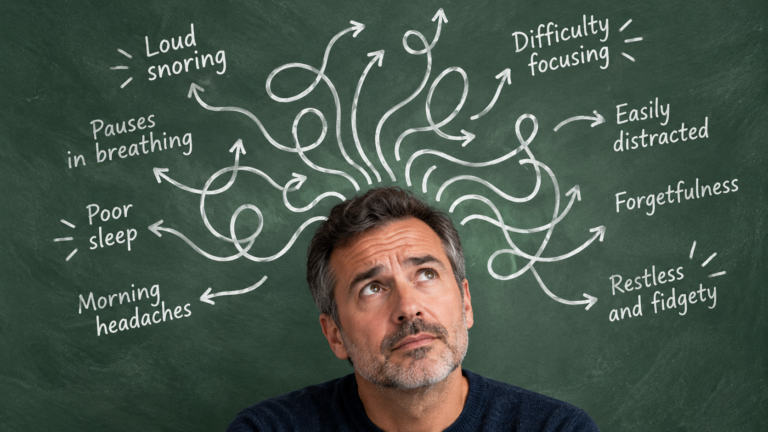
Here are some of the most common signs of sleep apnea, and the excuses men often use to explain them away:
| The sign | What guys usually say | What it might mean |
|---|---|---|
| Loud snoring most nights | “Everybody snores.” | Snoring is one of the most common signs of sleep apnea |
| Partner hears you stop breathing or gasp | “She’s exaggerating.” | Breathing pauses are an important warning sign |
| Waking up tired after a full night | “I just need a vacation.” | Your sleep may be getting interrupted all night |
| Morning headaches | “Too much screen time.” | Breathing disruptions during sleep can be linked with morning headaches |
| Dozing off on the couch or in meetings | “I’m getting old.” | Excessive daytime sleepiness is a common symptom |
| Short temper or low mood | “Stressful week.” | Poor sleep can affect mood and patience |
| Waking up to pee at night | “I drank too much water.” | Frequent nighttime bathroom trips can sometimes be linked with sleep apnea |
| Relying on caffeine to function | “I just love coffee.” | You may be making up for poor-quality sleep |
If you recognize two or three of these, it’s worth taking a closer look.
Not sure whether it’s snoring or something more? Here’s how to tell snoring from sleep apnea.
Why It Matters: Sleep Apnea and Men’s Health
Sleep apnea isn’t just about snoring or feeling tired. When it’s left untreated, it’s been linked with serious health concerns, including:
- High blood pressure
- Heart problems, including irregular heart rhythms
- Type 2 diabetes
- Weight gain, since poor sleep can make it harder to manage weight
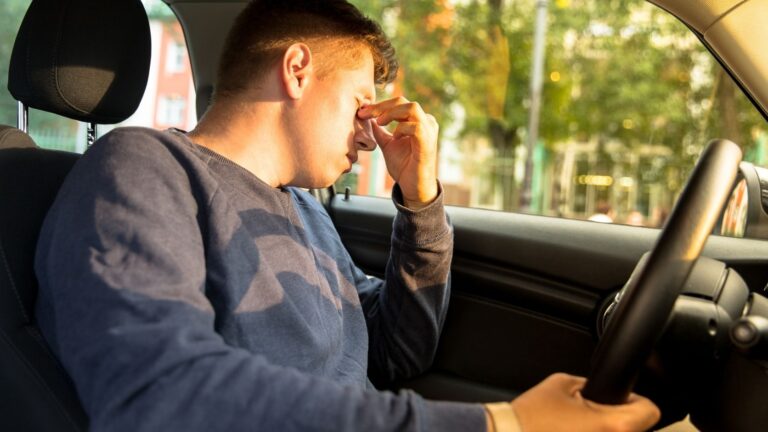
- Drowsy driving, which puts you and others on the road at risk
- Mood changes, like irritability or feeling down

That’s a big part of why sleep belongs on your men’s health checklist, right alongside blood pressure checks and regular checkups. Treating sleep apnea is one of the things you can do to look after your long-term health.
Safety note:
If you often feel dangerously sleepy while driving, don’t drive drowsy. Pull over, and talk to a healthcare professional as soon as possible.
Learn more about drowsy driving and sleep apnea.
Find out what’s happening while you sleep.
“I’m Fine.” Busting a Few Common Excuses

Let’s be honest: plenty of guys have a reason for not getting checked. Here are a few we hear often.
“I don’t have time.” A home sleep test means sleeping in your own bed. You don’t need an overnight hospital stay, and the test itself doesn’t require time off work.
“It’s just snoring.” Sometimes it is. But if your snoring comes with breathing pauses, gasping, or constant tiredness, it’s worth ruling out sleep apnea.
“I don’t want to wear a mask every night.” Getting tested doesn’t automatically mean CPAP. Your results guide what, if anything, is recommended, and there’s more than one treatment option.
“I don’t have a family doctor.” You’ll need a doctor’s referral for a sleep test, but if you don’t have easy access to a family doctor, our free online physician program can help you get started.
For Partners: How to Get Him to Take It Seriously

If you’re the one lying awake listening to the snoring and the pauses, you’re not alone. Partners are often the reason a man finally gets checked.
A few tips that can help:
- Pick a calm moment. Not at 2 a.m. when you’re both exhausted.
- Lead with concern, not complaints. “I’ve noticed you stop breathing sometimes, and it worries me” lands better than “Your snoring is driving me crazy.”
- Connect it to what he cares about. More energy for the kids, feeling sharper at work, staying healthy for the long run.
- Make it easy. Suggest taking the online sleep assessment together. It only takes a few minutes.
Testing is simpler than he thinks.
Sleep in your own bed, return the device, and get your results explained in plain language.
Getting Tested With Snore MD Is Easier Than You Think
Here’s how it works:
- Take our online sleep assessment. It takes just a few minutes and helps you see if a sleep test is right for you.
- Get referred. A doctor’s referral is required. Don’t have easy access to a family doctor? Our free online physician program connects you with a Snore MD partnered physician.
- Sleep at home. You take a small device home and sleep in your own bed while it records your breathing, oxygen levels, and heart rate.
- Get clear answers. A sleep medicine physician reviews your results, and our team explains them in plain language.

Wondering what comes next? Here’s what happens after your sleep test.
Treatment That Fits Your Life
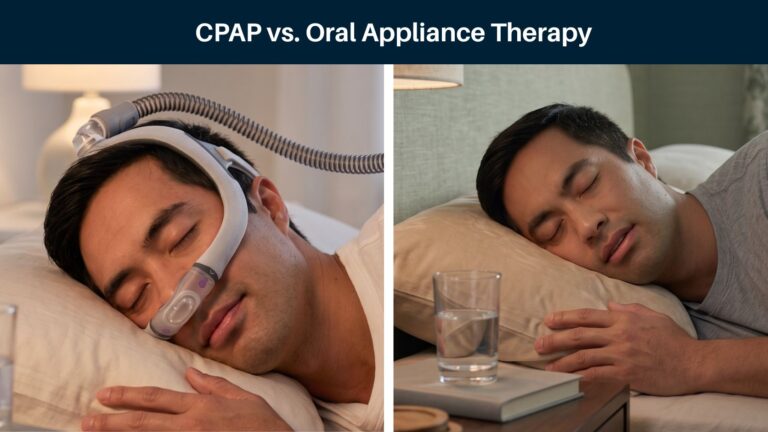
If your results show sleep apnea, our team helps you find a treatment option that works for how you live, sleep, and work. That might be CPAP therapy, the most common treatment for moderate to severe sleep apnea, or another option your physician recommends, like an oral appliance for some people with milder sleep apnea.
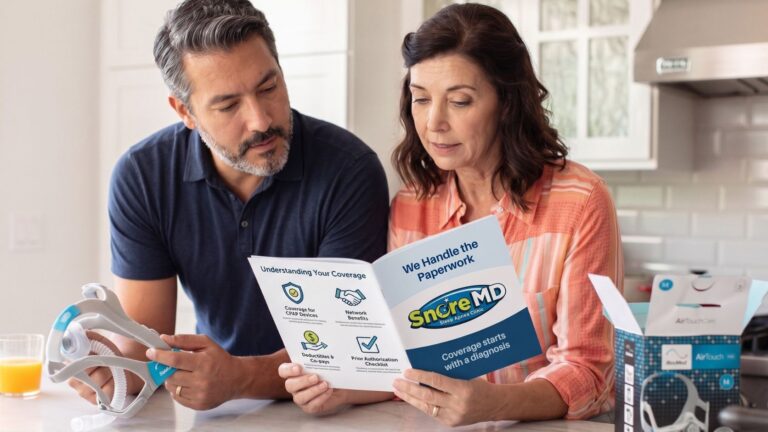
Our team also helps coordinate with your insurance provider, so you’re not stuck sorting out paperwork on your own. And through our Care For Life program, support continues long after your first appointment, with follow-ups, mask fittings, supplies, and adjustments whenever you need them.
Curious about your options? See how CPAP and oral appliance therapy compare.
Help is closer than you think.
With clinics across British Columbia and Alberta, there’s a Snore MD team near you.
Your Men’s Health Month Sleep Checklist
This November, run through this quick checklist:
- ☐ Has anyone told you that you snore loudly or stop breathing in your sleep?
- ☐ Do you wake up tired, even after a full night in bed?
- ☐ Do you get morning headaches or wake up with a dry mouth?
- ☐ Do you doze off during the day, while watching TV, reading, or driving?
- ☐ Do you rely on caffeine to get through the day?
- ☐ Have you been told you have high blood pressure?
If you checked one or more, it’s worth taking a few minutes to find out more.
Sleep apnea doesn’t affect only men. If you’re asking for someone else in your life, our guide on sleep apnea symptoms in women covers how the signs can look different.
Don’t Just Grow the Moustache. Check Your Sleep, Too.
Men’s health month is about taking care of yourself, and the people who count on you. Good sleep is a big part of that.
If you’ve been brushing off the snoring, the exhaustion, or the “you stopped breathing last night” comments, this is your sign to stop guessing. Getting checked is simple, it happens at home, and it could make a real difference to how you feel every day.
Make your sleep part of your men’s health checkup.
→ Take our online sleep assessment | Learn about our Home Sleep Test | Find a Clinic in BC or Alberta
Frequently Asked Questions
Yes. Obstructive sleep apnea is more common in men than in women, although it can affect anyone. Factors like neck size, weight, age, and alcohol use can all increase the risk.
Common signs include loud snoring, breathing pauses or gasping noticed by a partner, waking up tired, morning headaches, daytime sleepiness, irritability, and relying on caffeine to get through the day.
Untreated sleep apnea has been linked with high blood pressure and heart problems. If you have signs of sleep apnea, it’s worth talking to a healthcare professional and considering a sleep test.
It can. Alcohol relaxes the muscles in the throat, which can make snoring louder and breathing pauses more likely, especially when you drink close to bedtime.
Start with our quick online sleep assessment. A doctor’s referral is required for a sleep test, and if you don’t have easy access to a family doctor, our free online physician program can help. Most people can then do a home sleep test in their own bed.
Not necessarily. CPAP is a common treatment for moderate to severe sleep apnea, but your results and your physician’s recommendation will guide what’s right for you. Other options may be available.
Ready to Find Out What’s Happening While You Sleep?
Start with a quick online sleep assessment. It only takes a few minutes.