
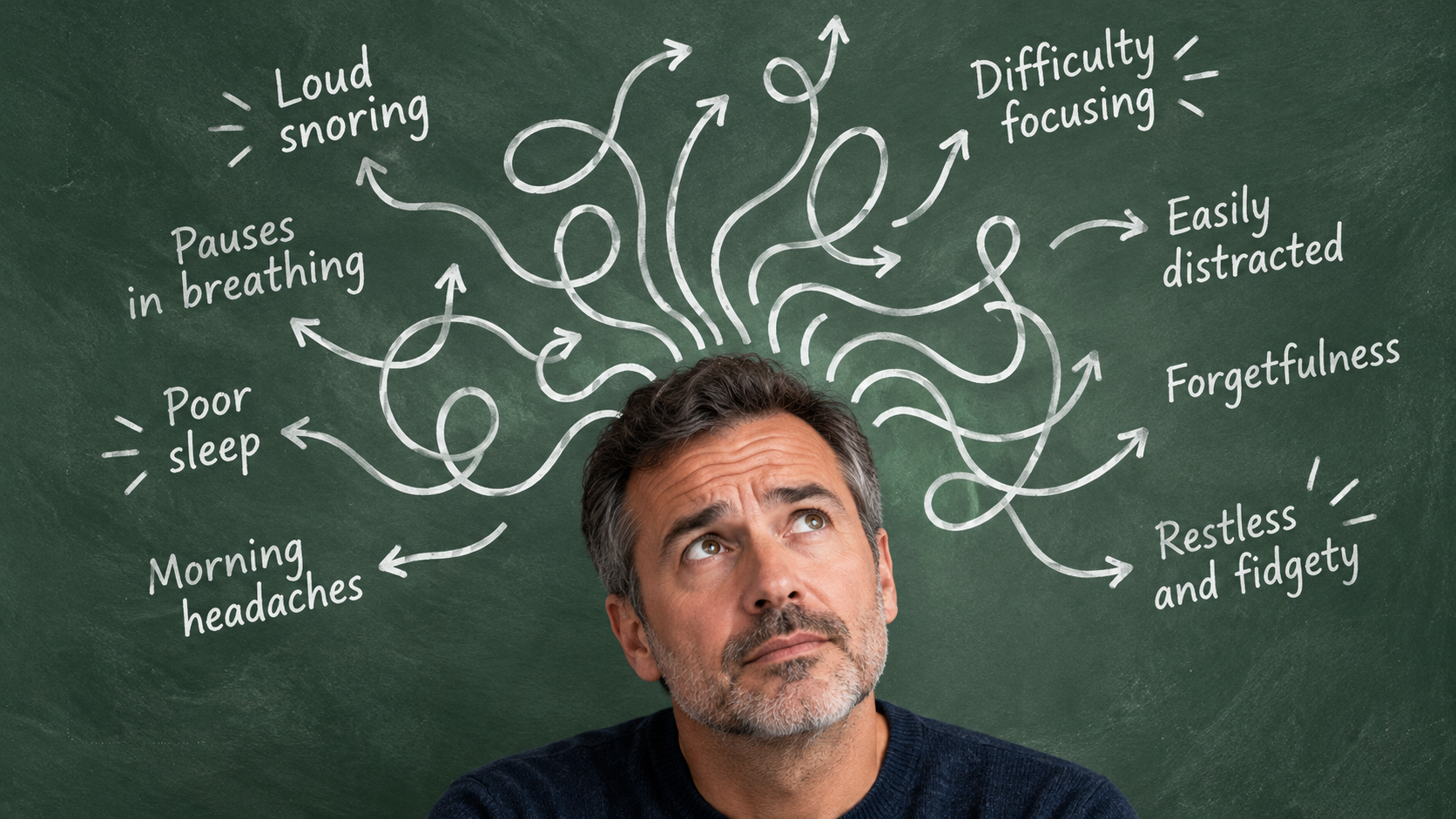
Sleep Apnea and ADHD: Why Poor Sleep Can Look Like ADHD

You sit down to work and your mind wanders within minutes. You lose your keys, forget why you walked into a room, and snap at people over small things. By mid-afternoon, you’re reaching for your third coffee just to keep going.
These struggles are often linked with ADHD (attention-deficit/hyperactivity disorder). But they’re also exactly what happens when your sleep is interrupted night after night, which is what sleep apnea does.
This isn’t about telling anyone they don’t have ADHD. ADHD is real, and it deserves proper care. The point is simpler: sleep belongs in the conversation. If you have trouble focusing and you snore, wake up tired, or feel exhausted no matter how long you’re in bed, sleep apnea may be playing a role, on its own or alongside ADHD.
What Is Sleep Apnea, in Plain Language?

Obstructive sleep apnea (OSA) happens when your airway gets blocked or narrowed again and again while you sleep. Each time, your breathing pauses or becomes shallow, and your brain briefly wakes you up to get air moving again.
Most people never remember these wake-ups. They can happen many times an hour, all night long. You might spend eight hours in bed and still wake up feeling like you barely slept, because your sleep kept getting broken into pieces.
That broken sleep doesn’t stay in the bedroom. It follows you into your day.
Not sure whether it’s snoring or something more? Here’s how to tell snoring from sleep apnea.
Why Sleep Apnea and ADHD Can Look So Similar
Your brain needs deep, steady sleep to recharge. When sleep is constantly interrupted, the parts of the brain that help you pay attention, control impulses, and manage emotions don’t get the rest they need. Drops in oxygen during those breathing pauses may add to the strain.
The result can look a lot like ADHD. Symptoms that show up in both include:
- Trouble concentrating or getting easily distracted
- Forgetfulness
- Impulsivity, such as acting or speaking before thinking
- Irritability or mood swings
- Restlessness
- Feeling tired or unmotivated during the day

Because these overlap so much, it can be hard to tell what’s causing what. Someone might be diagnosed with ADHD when poor sleep is part of the picture, or someone with ADHD might not realize a sleep problem is making their symptoms worse.
Worth knowing:
Trouble focusing doesn’t always start in the daytime. Sometimes it starts at night, with breathing that keeps getting interrupted while you sleep.
Can You Have Both ADHD and Sleep Apnea?
Yes. The two can exist together, and research suggests they show up together more often than you’d expect by chance. Some studies have found that people with ADHD are several times more likely to have sleep apnea or symptoms that suggest it, and the reverse.
Researchers are still learning why the two are linked. Possible explanations include the effect of broken sleep and low oxygen on the brain, and shared factors that may influence both conditions. What’s clear is that having one doesn’t rule out the other.
This post focuses on adults. Sleep-related breathing problems can also affect children, sometimes showing up as hyperactivity or behaviour challenges rather than sleepiness. If you have concerns about your child’s sleep, talk to their doctor.
ADHD or Sleep Apnea? Signs That Can Help Tell Them Apart
Some symptoms overlap, but others point more clearly in one direction. This comparison can’t diagnose anything, but it can help you notice patterns worth discussing with a healthcare professional.
| Sign | More often linked with ADHD | More often linked with sleep apnea |
|---|---|---|
| Trouble focusing | Common | Common |
| Irritability or mood swings | Common | Common |
| Feeling restless | Common | Can happen |
| Symptoms present since childhood | Typical | Not typical |
| Losing things, poor organization | Common | Less typical |
| Loud snoring on most nights | Not related | Common warning sign |
| Partner notices breathing pauses | Not related | Important warning sign |
| Waking up gasping or choking | Not related | Important warning sign |
| Morning headaches or dry mouth | Not typical | Common |
| Tired even after a full night in bed | Can happen | Common |
| Dozing off during the day | Less typical | Common |
The key difference: ADHD traits usually show up from childhood, across many settings. Sleep apnea signs centre on what happens at night: snoring, breathing pauses, gasping, and waking up unrefreshed.
If your focus problems came on or got worse as an adult, especially alongside snoring or weight changes, sleep is worth looking into.
Not sure if it’s your sleep?
A sleep test can show what’s happening with your breathing overnight, so you’re not left guessing.
“I Already Have an ADHD Diagnosis. Should I Still Think About My Sleep?”
Yes, especially if you notice any of the sleep apnea warning signs above.
An ADHD diagnosis doesn’t mean every focus problem comes from ADHD. If you’re managing ADHD and still feel exhausted, foggy, or more scattered than usual, untreated sleep apnea could be adding to the load.
A few things to keep in mind:
- Don’t stop or change any ADHD treatment on your own. Talk to the healthcare provider who manages your ADHD.
- Mention your sleep at your next appointment. Snoring, breathing pauses, and daytime sleepiness are all worth bringing up.
- ADHD can affect sleep in other ways too, such as trouble falling asleep. A healthcare professional can help sort out what’s going on.
Can Treating Sleep Apnea Help With Focus?
For many people, treating sleep apnea leads to more restful sleep, and better sleep can make a real difference to daytime energy, focus, and mood. Some adults with both conditions say they feel sharper and less drained once their sleep apnea is treated.
Every person is different, though. Treating sleep apnea isn’t a replacement for ADHD care, and it won’t make ADHD go away if you have it. What it can do is remove one major source of daytime struggle, so you and your healthcare provider can see your situation more clearly.
For a closer look at memory and mental clarity, see how sleep apnea affects your brain.
When Should You Consider a Sleep Test?
Consider talking to a healthcare professional about a sleep test if you have trouble focusing or feel restless, plus any of the following:
- Loud or frequent snoring
- A partner who notices pauses in your breathing
- Waking up gasping, choking, or snorting
- Feeling unrefreshed, even after enough time in bed
- Morning headaches or a dry mouth
- Dozing off during the day, while reading, watching TV, or driving
- Focus problems that started or got worse in adulthood
- ADHD symptoms that feel worse than usual, even with treatment
- Relying on caffeine just to get through the day
Safety note:
If you feel dangerously sleepy, don’t drive or operate machinery. Talk to a healthcare professional as soon as possible.
Getting a Sleep Test With Snore MD Is Easier Than You Think
If you’re tired of guessing, a sleep test is the clearest way to find out whether sleep apnea is part of your story. At Snore MD, we make the process simple:
- Get referred. A doctor’s referral is required. If you don’t have easy access to a family doctor, we have a free online virtual program, and we can arrange a consultation with an online physician.
- Sleep at home. You take a small device home and sleep in your own bed while it records your breathing, oxygen levels, and heart rate.
- Understand your results. A sleep medicine physician reviews your results, and our team explains them in plain language.
- Find a treatment that fits your life. If treatment is recommended, we’ll help you explore options that suit your needs and lifestyle, whether that’s CPAP or another path your physician recommends.
- Get help with insurance. Our team helps coordinate with your benefits provider, so you’re not sorting out paperwork alone.
- Keep getting support. Through our Care For Life program, we stay with you with follow-ups, mask fittings, supplies, and adjustments as your needs change.
Curious about treatment? Learn more about CPAP and oral appliance options.
Could poor sleep be behind your focus struggles? Find out what’s happening while you sleep, with a care team that supports you at every step.
What You Can Do Before Your Appointment
While you wait for an assessment, a few simple steps can help you and your healthcare provider get a clearer picture:
- Ask your partner what they notice. Snoring, silent pauses, or sudden gasps are important clues.
- Keep a short sleep and energy log. Note when you go to bed, how you feel when you wake up, and when focus is hardest during the day.
- Track your caffeine. If you need more and more to function, write that down.
- List your questions. Bring them to your appointment, along with any ADHD treatment you’re currently using.
Don’t Let Exhaustion Hide in Plain Sight
Trouble focusing, forgetfulness, and irritability can have more than one cause. Sometimes it’s ADHD. Sometimes it’s broken sleep. Sometimes it’s both.
Untreated sleep apnea isn’t just about feeling tired. Over time, it’s linked with serious health concerns like high blood pressure and heart problems. Finding out whether it’s part of your picture is a simple step that can make a real difference.
Stop guessing. Get answers. A sleep test can help show whether sleep apnea is affecting your focus, energy, and mood.
→ Book a Sleep Test | Learn about our sleep test | Find a clinic in BC or Alberta
Frequently Asked Questions About Sleep Apnea and ADHD
Yes. Broken sleep and drops in oxygen can lead to trouble focusing, impulsivity, irritability, and restlessness that look a lot like ADHD. A sleep test can help show whether sleep apnea is involved.
It can. Because the symptoms overlap, poor sleep can be overlooked when someone is being assessed for attention problems. That’s why it’s worth mentioning snoring, breathing pauses, or constant tiredness to your healthcare provider.
Yes. Research suggests the two often show up together. Having one doesn’t rule out the other, and both deserve proper care.
No. Treating sleep apnea doesn’t cure ADHD. But better sleep can improve daytime energy, focus, and mood for many people, which may make ADHD easier to manage alongside your existing care.
If you have ADHD and also snore, wake up tired, have morning headaches, or your partner notices breathing pauses, it’s worth discussing a sleep test with a healthcare professional.
Yes, a doctor’s referral is required. If you don’t have easy access to a family doctor, Snore MD can arrange a consultation with a free online physician through our virtual program.
Ready to Find Out What’s Going On?
A simple sleep test can show whether sleep apnea is part of what’s behind your focus, energy, and mood.

