
What Happens After Your Sleep Test: A First-Timer’s Guide to Starting CPAP

Taking a sleep test is a big step — and once it’s done, it’s normal to wonder what comes next. Will you get answers? Does a result mean CPAP forever? What actually happens at that first appointment?
Here’s the reassuring part: the hardest step is already behind you. Once your test is complete, everything that follows is designed to move at your pace, with a care team explaining each part in plain language. You’re not handed a machine and left to figure it out alone.
This guide walks through exactly what happens after your sleep test — from getting your results explained, to understanding what they mean, to what starting CPAP actually looks like for a first-timer. The goal is simple: to take the mystery out of the next few weeks so you can feel confident about better sleep ahead.
Haven’t tested yet? That’s the place to start — everything below begins with knowing what’s happening while you sleep.
First: Your Results Get Explained to You
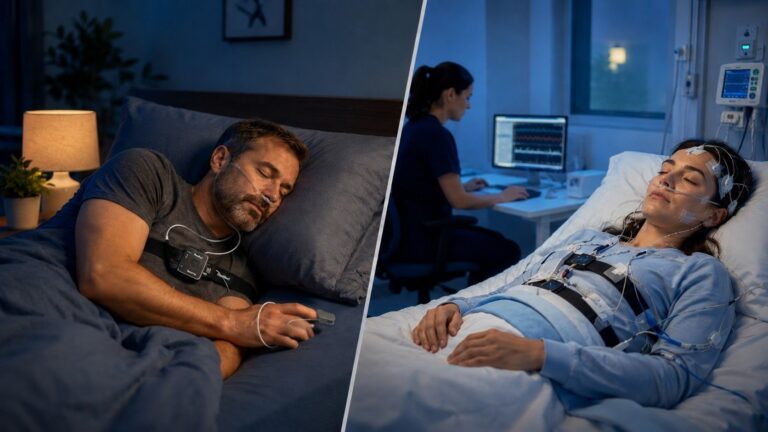
A sleep test records what’s happening while you sleep — things like your breathing, how often it pauses or becomes shallow, your oxygen levels, and your heart rate. On its own, that’s a page of numbers. The important part is having someone walk you through what those numbers actually mean for you.
At Snore MD, once your test has been reviewed by a sleep medicine physician who interprets home sleep test results for patients, the clinic team sits down with you and explains the findings in plain language — no jargon, no guesswork. They’ll help you understand whether your breathing was being interrupted overnight, how often, and how significant that is. Just as importantly, they’ll connect the results back to how you’ve been feeling: the snoring, the daytime tiredness, the morning headaches, or whatever brought you in.
Your results are always read alongside your symptoms and health history, not in isolation. That’s why the review conversation matters as much as the test itself — it turns data into a clear picture of what’s going on and what, if anything, is worth doing about it.
Understanding What Your Results Mean
Sleep apnea is usually described as mild, moderate, or severe, based on how many times your breathing was interrupted per hour of sleep. You don’t need to memorize the thresholds — that’s what your care team is for — but a few plain-language points help:
- A result isn’t a verdict on your willpower or health habits. Sleep apnea is a physical, structural issue with how the airway behaves during sleep. It’s common, and it’s treatable.
- Severity guides the plan, not just a label. Negative or mild findings may open the door to simpler first steps, while moderate-to-severe findings often point to more active treatment. Your team tailors the recommendation to your specific situation.
- The numbers are only part of the story. How tired you feel, your health history, and other factors all shape what’s recommended next.
The takeaway: a diagnosis is a starting point, not an endpoint. It’s the moment you finally have real information to act on — instead of guessing.
Good to know:
Getting a result can feel daunting, but most people describe relief more than anything. Finally knowing why you’ve been exhausted — and that there’s something you can do about it — is a genuine turning point.
If CPAP Is Recommended: What the First Appointment Looks Like
CPAP (continuous positive airway pressure) is the most established, widely recommended treatment for moderate to severe sleep apnea. It works by gently delivering a steady stream of air through a mask, keeping your airway open so it doesn’t collapse or narrow while you sleep. That’s it — no surgery, no medication.
If CPAP is recommended for you, your first setup appointment is where it becomes real and manageable. Here’s what typically happens:
Finding the right mask. This is the single biggest factor in whether CPAP feels comfortable. There are several styles — small ones that sit under the nose, ones that cover the nose, and full-face options — and your team helps you try them to find the fit that suits your face and how you sleep. There’s no one-size-fits-all, and getting this right early makes a real difference.
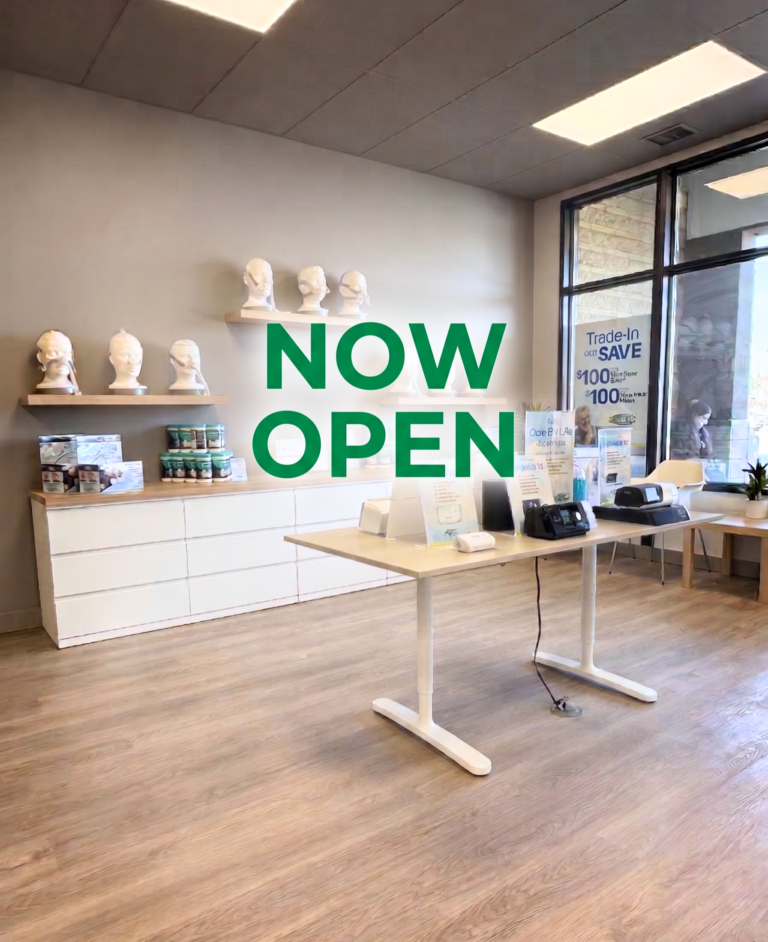
One of the advantages of Snore MD is that you don’t have to make these decisions on paper. You can come into a clinic and see the machines and masks in person, and a sleep clinician will show you how the different mask models actually fit — so you can feel the difference between styles and choose based on real comfort, not a picture on a website. Being able to try things on before you commit takes a lot of the uncertainty out of starting therapy.
Setting up your machine. Your team configures the device to the prescribed pressure that’s right for you and shows you how it works — turning it on, using the ramp feature that starts you off gently, and keeping it clean. Many modern machines adjust automatically through the night, so it’s far less fiddly than people expect.
Answering your questions. How do I travel with it? What if I breathe through my mouth? What about my partner? This is the time to ask everything. A good setup appointment leaves you feeling equipped, not overwhelmed.
You leave knowing how to use your equipment confidently at home — and you’ll know exactly who to call if anything comes up.
The First Few Nights: What to Actually Expect

Let’s be honest — sleeping with something new on your face takes a little getting used to. Almost everyone feels this at first, and almost everyone adjusts. Knowing what’s normal helps enormously.
Here are the most common first-timer concerns and what helps with each:
- “The mask feels strange.” Wearing it for short stretches while awake — reading or watching TV — helps your body get used to it before bedtime. Small strap adjustments (snug, not tight) fix most comfort issues.
- “The air pressure feels like a lot.” The ramp feature starts you at a lower pressure that builds gradually as you fall asleep, which makes the first nights far easier.
- “I feel a bit closed-in.” This is common and it fades. A different mask style — like the minimal under-the-nose type — solves it for many people. Your team can swap you to something that feels better.
- “I’m getting a dry mouth.” Usually an easy fix with humidity settings or a small mask adjustment. Worth mentioning at your follow-up or via text to your care team.
- “Will it bother my partner?” Most people find the opposite — a quiet machine is a welcome change from loud snoring. There are simple ways to manage tubing and positioning, too.
The key thing to remember: an awkward first week is not a sign that CPAP won’t work for you. It’s a normal adjustment, and it’s exactly what your care team is there to help you through. Small tweaks in those early weeks are what turn “I’m not sure about this” into restful, consistent sleep.
CPAP Isn’t the Only Path — Treatment That Fits Your Life
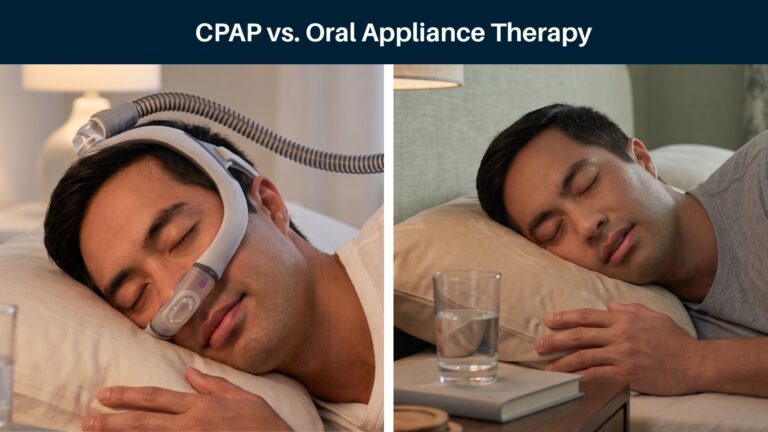
CPAP is highly effective, but it isn’t the only option, and the right treatment is the one you’ll actually stick with. If CPAP genuinely isn’t recommended for you or not a fit for your lifestyle, other approaches exist — including oral appliance therapy, a custom-made device a bit like a mouthguard that helps keep your airway open, which suits some people with milder sleep apnea or those who can’t tolerate CPAP.
What matters is that your treatment is matched to your symptoms, your test results, and how you live — not chosen off a shelf. Snore MD’s care team is there to walk through the options with you, explain the trade-offs in plain terms, and help you land on something realistic. The goal was never “use a machine.” The goal is restful sleep and the health benefits that come with it.
The bottom line: Reducing the sound of snoring or picking a device isn’t the finish line — treating the underlying breathing problem is. The right plan is built around your results and your life.

Insurance and Ongoing Support Are Handled For You
Two things people worry about after a diagnosis are cost and being left on their own. Snore MD helps with both.
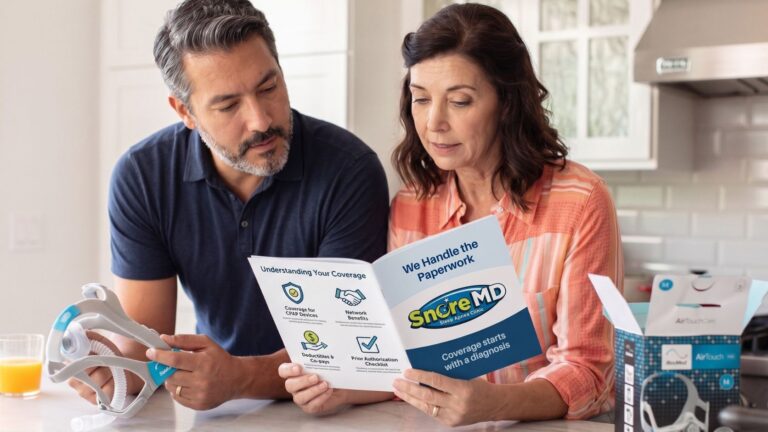
Insurance coordination. Coverage for equipment varies by plan and province across BC and Alberta, and sorting it out yourself can be confusing. The clinic team helps coordinate your insurance and coverage questions so you’re not navigating the paperwork alone.
Care For Life. Support doesn’t stop after your first appointment. Through Snore MD’s Care For Life program, follow-ups continue as your needs change — checking how therapy is going, adjusting comfort, sorting mask fit, and helping with replacement supplies down the road. If something isn’t working, there’s a local team to fix it, not a dead end.
What to Expect, Step by Step
| Step | What happens | What you do |
|---|---|---|
| Sleep test | You record your breathing, oxygen, and heart rate overnight in your own bed | Take the test, return the device |
| Results review | A sleep medicine physician interprets your test, then your team explains the findings in plain language | Ask questions, share how you’ve been feeling |
| Treatment plan | A recommendation is tailored to your results and lifestyle | Discuss options that fit you |
| CPAP setup (if recommended) | Mask fitting, machine setup, and hands-on training | Try mask styles, learn the basics |
| First few weeks | The adjustment period — small tweaks for comfort | Wear it nightly, flag anything uncomfortable |
| Ongoing care | Follow-ups, supplies, and support through Care For Life | Stay in touch as needs change |
Every step is designed to be simple and supported. You’re never expected to figure it out alone.
Ready to Take the First Step?
Getting started takes just a few minutes.
Frequently Asked Questions About Starting CPAP After a Sleep Test
It varies by clinic and the type of test used, but the process is designed to be quick and clear. Your clinic team reviews the recording, then walks you through what it means in plain language — connecting the numbers to how you’ve actually been feeling. Call your local Snore MD clinic to confirm timing.
Not necessarily. CPAP is the standard treatment for mild to severe sleep apnea, but treatment depends on your results and your situation. For some people, other options are appropriate, and things can be reassessed over time. Your care team guides those decisions with you — it’s a conversation, not a life sentence.
This is one of the most common worries, and it’s very fixable. Most early discomfort comes down to mask fit or pressure settings, and small adjustments solve it for the majority of people. If CPAP genuinely isn’t right for you, the team can discuss other treatment paths. The point is to find something you’ll actually stick with.
Yes. You’re welcome to come into a Snore MD clinic to learn more about the machines and masks and see them for yourself. A sleep clinician can show you how the different mask models fit, so you can feel the difference between styles and choose based on real comfort rather than a picture. Trying things on in person is one of the easiest ways to feel confident about starting therapy.
Less than most people expect. Your setup appointment covers everything hands-on — mask fitting, how the machine works, distilled water and cleaning — so you leave feeling confident. Modern machines are simpler than their reputation, and your team is a phone call away if questions come up.
Coverage depends on your plan and province. Rather than leaving you to sort it out, Snore MD’s team helps coordinate your insurance and coverage questions so the process is as smooth as possible. Ask your local clinic what applies to your situation.
Through Snore MD’s Care For Life program, support continues well past your first appointment — follow-ups, comfort adjustments, mask fitting, and replacement supplies as your needs change over time. Having 30+ local clinics in BC or Alberta means help is always close by.
Right here. A home sleep test with Snore MD is simple to set up in your own bed, and everything in this guide begins with knowing what’s happening while you sleep. Book a sleep test, and the team takes it from there.
Stop Wondering What Comes Next
From the first night’s recording to ongoing support, Snore MD makes each step simple, clear, and built around your life.